
The Five Game Changers
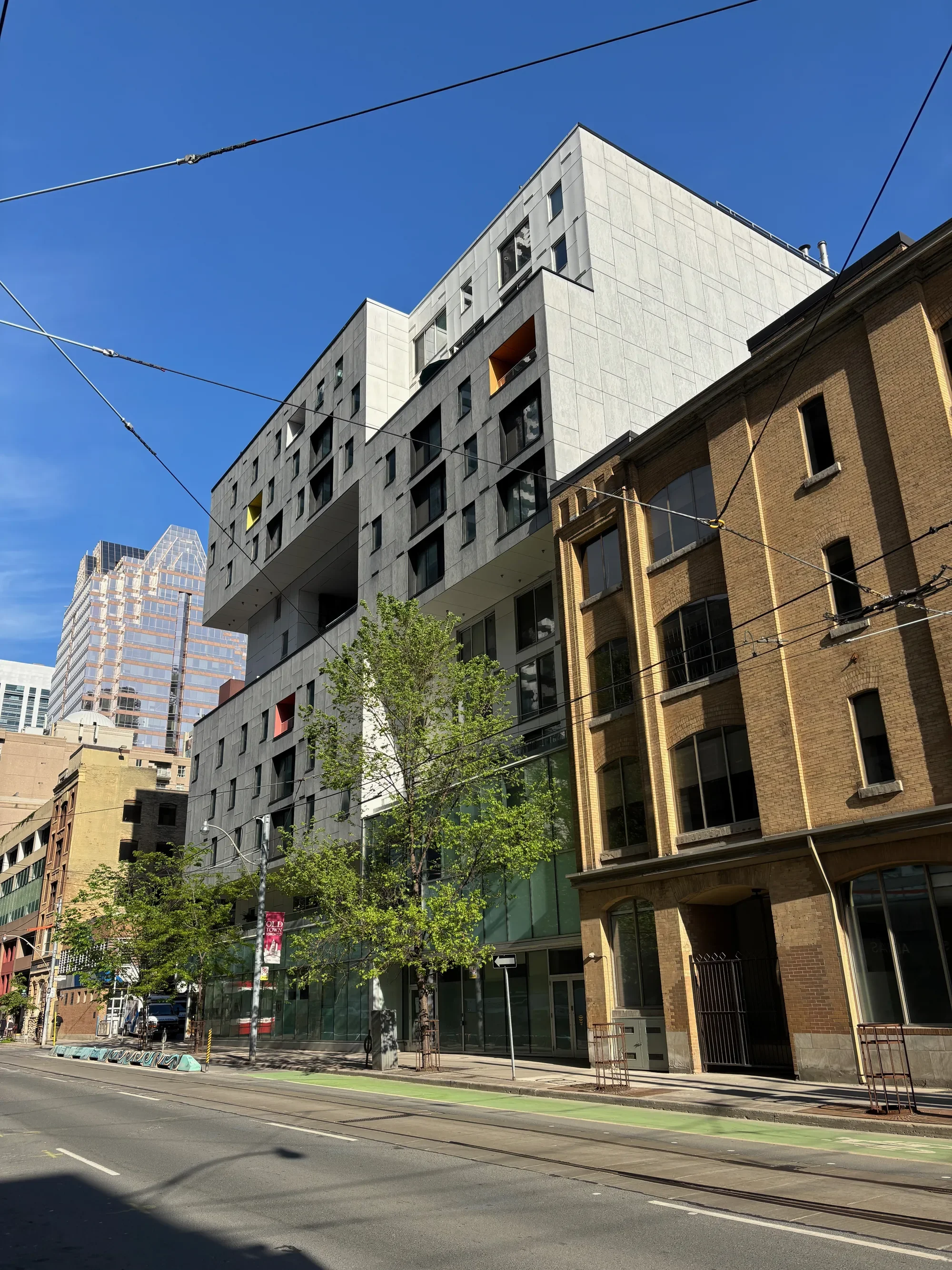
Canada faces a housing crisis that demands more and better homes - homes that make everyday life easier, healthier and more secure. Meeting this challenge will require everyone involved in housing to break with business as usual. The scale of the crisis calls for bold thinking and new approaches, focused on the areas where sustained investment and support can have the greatest impact.
More and Better Housing has distilled its work into five high-impact priorities, which we call the "game-changers." Each addresses a different housing challenge. Together, they show how well-designed policies can improve affordability, reduce emissions, strengthen climate resilience and increase the pace of construction - without treating these goals as competing priorities.
1. Legalize density
Legalizing family-friendly, gentle density is the single most important step Canada can take because it advances all four goals at once. Directing new homes to existing cities and communities - where roads, water systems and transit are already in place - makes more efficient use of land and infrastructure. This approach lowers per-unit costs, supports sustainable municipal finances, reduces greenhouse gas emissions, speeds up construction and produces homes that are more resilient to climate impacts. Affordability improves further when families can live in neighbourhoods served by transit and active transportation, since transportation costs can rival housing costs.
Legalization alone, however, is not enough: new homes must also be practical and cost-effective to build. Reforms are often undermined by counterproductive requirements, such as high development charges, parking minimums and slow approval processes, that prevent construction even where it is technically permitted. Legalizing density must therefore mean making it viable under ordinary conditions, without requiring exceptional treatment or ingenuity. It should be straightforward to build.
2. Adopt better building codes
If the first game-changer is about where homes are built, the second is about what gets built. A building's form, materials and design requirements all affect its construction and operating costs, resilience to extreme weather, carbon footprint and the sector's capacity to build at scale.
A necessary first step is for governments to adopt the highest tiers of the National Model Building Codes, while updating those codes to support climate resilience and more efficient use of space. But stopping there would miss a larger opportunity. Dozens of common-sense reforms could make it easier to build more and better homes. Changes to single-stair egress rules, elevator standards, timber construction requirements and floor-plate restrictions could enable many more of the larger, family-friendly homes that are in high demand in transit-rich neighbourhoods.
3. Go big on modern methods of construction
The third game-changer addresses a productivity crisis in homebuilding. While sectors such as automotive manufacturing have achieved substantial productivity gains, productivity in homebuilding has stagnated or even declined. Canada employed a record number of construction workers in 2023, yet annual housing starts have barely changed in decades. Building homes as we have for the past century will not deliver the number of homes Canadians need.
The way forward is to change how homes are built by scaling up factory-based approaches, such as modular construction and panelization, and accelerating the use of innovative materials, including mass timber and low-carbon concrete. In addition to improving productivity and shortening construction timelines, these approaches can improve housing quality, lower costs, strengthen supply-chain resilience and sharply reduce construction waste.
4. Build for a changing world
The fourth game-changer reflects a simple truth: the most expensive home is the one that must be rebuilt after an extreme weather event. The housing shortage creates pressure to build on any available land, including areas exposed to flooding, wildfire and other hazards. But any short-term gains will come at a high cost. Insurers paid out more than $8 billion for extreme weather losses in 2024, while total insured and uninsured losses approached $20 billion - many times higher than just five years earlier.
Crucially, reducing risk does not have to come at the expense of housing supply. For example, redirecting construction away from areas at high risk of flooding would affect only about 3% of planned housing, while reducing the flood risk facing new homes by roughly 80%. Building for a changing world - one in which people can live safely and securely - is fundamental to delivering more and better housing.
5. Deliver millions of new community and non-profit homes
Even with the legislative, regulatory and industry changes needed to deliver more and better housing, renewing Canada's housing stock will take time. Many households do not have time to wait. Across the country, people from all walks of life are struggling with high costs and poor-quality housing, sometimes in severe circumstances. Governments and non-profit housing providers can act now by delivering millions of new community and non-profit homes and accelerating progress toward better housing for everyone.
Community and non-profit housing is a game-changer because it addresses two fundamental needs: improving housing outcomes for people who are poorly served by conventional options, and demonstrating and accelerating the changes needed in priority neighbourhoods and regions. Governments and non-profit providers do not have to wait to see their communities flourish; they can help lead the way.
